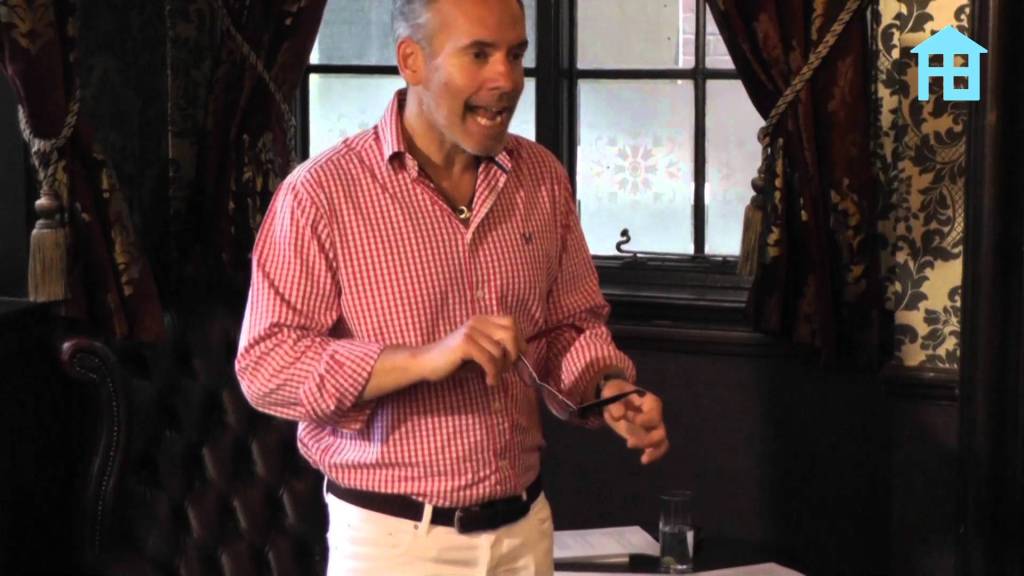
Bitcoin itself isn’t changing the world, but the technological breakthrough that made it possible, the blockchain, is.
The first big point made in Dominic Frisby’s talk concerned the difference between money and cash. Money can be coins or bank notes, but it can also be bank accounts, air miles, supermarket points, and so on – anything you can swap for some good or service with the people promising to do this. Cash is something else again. Cash transactions depend on no middle man to register the change in the numbers. Cash is anonymous. Person A hands over cash to Person B, in exchange for whatever they’re exchanging. Nobody else is involved. Neither needs to know who the other person is or how he came by the thing being exchanged. That is cash, and the point about Bitcoin is that it accomplishes digitally that same kind of one-to-one, completely anonymous relationship. Bitcoin is digital cash.
For years, computer coders had been trying to replicate that cash transaction digitally, and none of them could find a way of doing it without involving some kind of middle man. … The blockchain was the breakthrough tech.
A blockchain is a huge database which is shared by all the people who use Bitcoin, which records every Bitcoin transaction that has ever taken place, and which is updated every ten minutes, with a new “block”. Each update then remains in the Bitcoin blockchain, unchangeably, for ever.
The price of Bitcoin at first rose crazily, but then it fell back. Boom, and then, not bust exactly, but a big decline and then a flattening out, with a corresponding decline in public excitement and interest.
So Bitcoin hasn’t, despite all the early excitement, changed the world. The one big Bitcoin change that Frisby did talk about is that it has made life massively easier for online black marketeers. Black marketeers always want cash, and thanks to Bitcoin the “dark net” is now booming. It took the FBI forever to shut down just one internet black market site. When they did, dozens more immediately went online to fill the gap.
Similarly, Bitcoin is only the most prominent of many new digital currencies that the blockchain idea makes possible. As long as governments control money, they will always have disproportionate power.
But:
We seem to moving into a kind of Hayekian period of competing currencies.
Which is, as Frisby said, nice.
But the blockchain idea has applications right across the computing board, and Frisby then moved on to talking at some length about these. The application that spoke most appealingly to me was that identifying yourself to your computer, and hence to all the people with whom you interact via your computer, will become a lot easier, less clunky, and more secure.
Much less attractive, to me, was the idea that there might be a lot more political voting. Blockchains make possible, said Frisby, voting that can be both non-corrupt and immediately counted. Again, you stop relying on that middle man.
However, influencing the world by giving an Uber customer or a hotelier a good review (both things that Frisby also mentioned), or for that matter a bad review is one thing. The political obsessives of the world foisting their political opinions, directly, every day, upon everyone else sounds like a nightmare of politicised interference, rather than any sort of libertarian utopia of competing currencies and completely secure internet trading. Frisby merely alluded to such voting arrangements. And although I may be jumping to a wrong conclusion here, he sounded like he was in favour of them. Nevertheless, if blochchainery makes such arrangements possible, and if the politicians embrace them, then that will certainly change the world, and Frisby was not wrong at all to be mentioning such a possibility.
At the end of the bit of his talk where he discussed blockchain tech, Frisby said he had spent too long talking about it, but it seemed to me very reasonable that he should have got a bit carried away about blockchains and all their many potential impacts upon the world.
He ended by alluding to the fact that mobile phones, and in particular mobile phone banking and finance, are taking off big time, worldwide. More people now have mobile phones than modern toilets. This is a new world, upon which blockchainery will impact hugely.
If you sense that I feel rather out of my depth in describing all these dramas and excitements, you would not be wrong. Do you say “blockchain”, “the blockchain”, “blockchains”, “blockchain tech”, or perhaps my own suggestion of “blockchainery”, when talking about this stuff? I also remain rather mystified about how exactly (the) blockchain(s) (ery) (tech) remain(s) impervious to the attentions of hackers. If Frisby explained this in his talk, I missed that bit.
There were some mysteriously annoying noises off picked up by the video camera that night, sounding rather like sudden gusts of high wind. But these noises are well worth listening past, so to speak. Also, Frisby mentioned that he was suffering from a rather bad dose of hay fever, which would not have been obvious to me if he hadn’t said, but which may account for why there were moments when he seemed to lose the thread, somewhat, of what he was saying. (In this respect his manner of public speaking reminded me of me.) But such blemishes did not, for me anyway, spoil this hugely interesting and informative talk. It lasts under half an hour, and I recommend it.
More generally, I recommend the man himself. Dominic Frisby is, despite the occasional hesitations in this particular performance, and despite also what he said at the start of this talk about how he keeps his commentary about things like Bitcoin and blockchains separate from his other career as a stand-up comic, a most engaging and entertaining speaker. His air of good humour and all round nice-guy-ness comes across no matter what he happens to be talking about or how serious he is being about it.
There are many other bits of Frisby video available on the internet, both serious and comic, and there is now of course his book about Bitcoin. I also particularly liked his earlier book, which he also mentioned in this talk in passing, entitled Life After The State.
Very interesting talk. Very interesting man.


 Libertarian Home
Leave a reply to Libertarian Home video talks summarised « Samizdata Cancel reply