Water, the stuff piped into your home and er… out again, is a privatised industry in the UK. Like many of the Thatcher era privatisations it works on the principle of a regional monopoly. So, in the Thames region we have “Thames Water”. There are no alternatives.
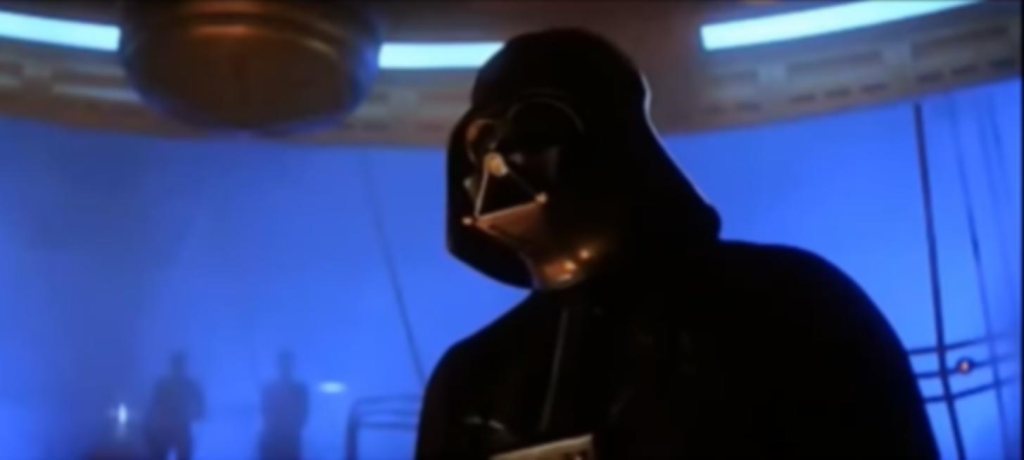
Therefore when Thames Water says it is going to make a change then it is like Lando Calrissian vs Darth Vader. They can change the terms of the agreement, and if you don’t like it you get to move house in a hurry. This week, apart from when it is snowing, Thames Water has been busy making just such a change in my road. They have dug up pavements to put in Smart Meters. These gadgets sit under the road and are attached to the water supply into your home. They watch what you use and you get to pay for it. I have had a letter and a visit to my door to tell me this is happening and there is no choice in the matter.
Superficially this does appears to be at least a reasonable change. The status quo allows unfettered use of water, but home water use is very sensitive to lifestyle choices and by definition, those are private choices. The classic example of tension arising over from this is during water shortages. Suddenly gardeners are a public nuisance and you get a “hose-pipe ban”. It does seem reasonable that gardeners, and those who like to run a bath, etc, should all pay for their luxuries. In fact, compared to a hose pipe ban this is maximises both liberty and accountability.
I have three objections to this narrative:
The particular meters being installed are able to measure water usage by the hour. That high-definition reporting of water use is already enough to raise privacy concerns. It is enough to show which houses are empty, how many people live there, what hours do they keep and a little about what they do. Why did No 43 have a shower at 3am? That is a question that exactly nobody outside no 43 should be asking.
Going back to gardeners. Not all gardeners are growing pretty flowers, or keeping immaculate lawns. It is less common in the Thames region than, say, Norfolk but some gardeners will in fact be growing food. If these growers are pensioners on fixed incomes then they are very sensitive to price changes. In an area where there are a lot of small holders, like Norfolk, then clever gardening can lower water usage below the average for the area, so a meter might help. This is less likely in the Thames region, where household expenses are already high. This turns the narrative upside down. These are high-water users who are not rich people enjoying luxuries, but poor people struggling to feed themselves.
That some gardeners are growing their food is not the only reason to lay off them. Indeed, I would go further. Unless we accept and endorse the self-interested pursuit of luxury then our world will be devoid of beauty, art, and ultimately hope. I would like anyone using more water to pay their way, but I want to highlight the difference between paying your way and being punished for doing something good. The latter is not a welcome aspect of the narrative.
What would I do? Well as I said water meters, compared to hose pipe bans would seem to maximise both liberty and accountability. They are therefore an improvement which ought to be welcomed. We are lucky we now have the technology for them. If it is feasible to offer a flat-rate service then I would like that to be an option in the market but the real problem is in the details. The data handling, security, the rate card, accurate measurement etc. Water companies ought to be accountable to customers over those details. Today water companies are closely regulated monopolies. The myriad problems likely to come up will be resolved only very slowly and reluctantly, if at all. We deserve a better model. We deserve the right to be able to choose who we deal with in every aspect of our lives.
Achieving consumer choice for household water would seem to be difficult for practical and technological reasons. Solving those problems is an issue for an entrepreneur or inventor, but we must recognise an uncomfortable imbalance of power for what it is.


 Libertarian Home
Leave a reply to Ken Ferguson Cancel reply